25 Sep 2026
Mapping Shifts in Software Algorithms Across Digital Card Gaming Platforms
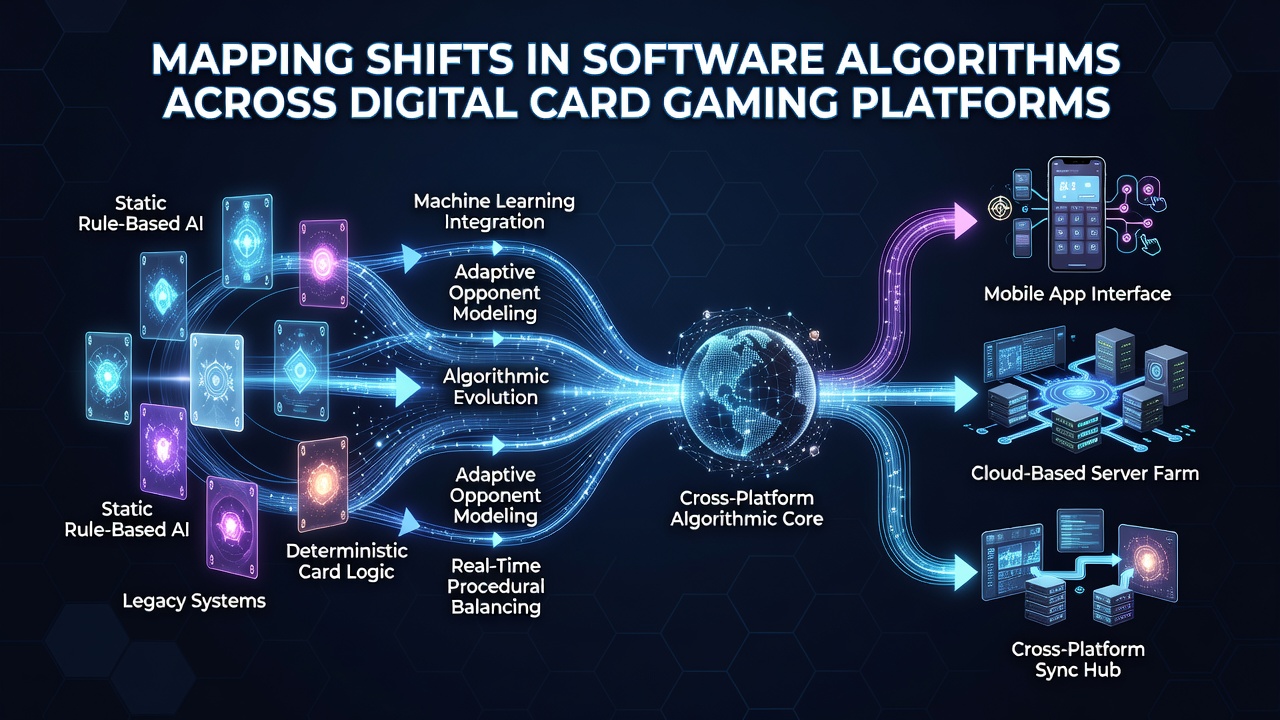
Digital card gaming platforms have undergone measurable changes in their underlying software algorithms over the past decade, driven by advances in computational methods and increasing user bases. Researchers tracking these developments note that early systems relied primarily on basic pseudorandom number generators for shuffling and dealing, whereas contemporary platforms integrate machine learning models for opponent behavior prediction and dynamic difficulty adjustment.
Early Algorithm Foundations in Card Game Software
Initial digital card platforms from the 1990s and early 2000s employed deterministic algorithms that processed fixed rule sets for games such as solitaire variants and bridge simulations. Data from archived technical specifications reveals that these systems used linear congruential generators to produce card sequences, with limited capacity for real-time adaptation. Observers note that computational constraints at the time restricted processing to sequential operations, which produced predictable patterns under high-volume testing.
By the mid-2000s, developers began incorporating cryptographic hash functions into shuffling routines to address statistical vulnerabilities identified in independent audits. Figures from industry technical reviews indicate that adoption rates for improved random number generators reached approximately 65 percent among major platforms by 2010. These upgrades reduced detectable biases in card distribution while maintaining compatibility with existing game engines.
Integration of Machine Learning and Adaptive Systems
Recent years have seen platforms shift toward reinforcement learning algorithms that analyze player decisions across millions of sessions to refine AI opponents. In September 2026, reports compiled by gaming technology consortia documented a 40 percent increase in the deployment of neural network-based decision engines compared with 2023 baselines. These models process inputs including betting patterns, timing data, and historical outcomes to generate context-specific responses during gameplay.
Matchmaking systems represent another area of algorithmic evolution, moving from simple skill-rating calculations to graph-based clustering methods that account for multiple variables simultaneously. Engineers at several large platforms have published details on implementations that combine Elo-derived metrics with network flow optimization, resulting in reduced queue times and more balanced pairings according to aggregated performance logs.
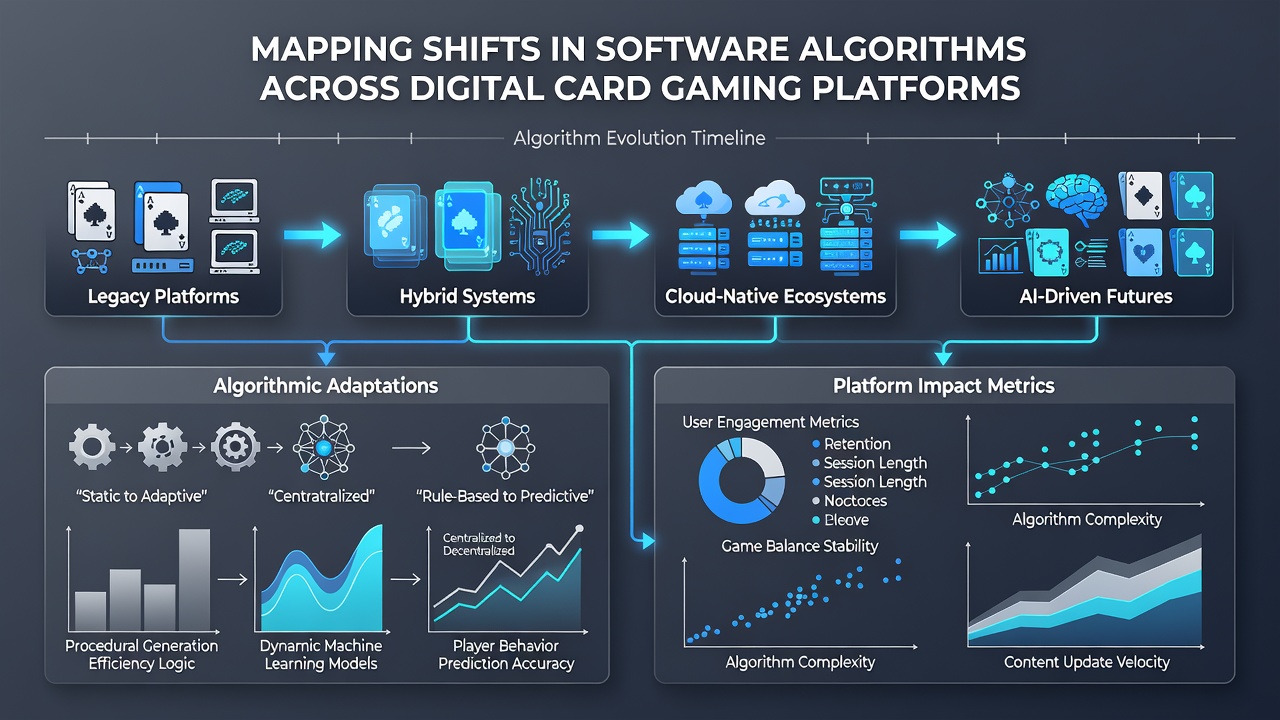
Security-related algorithms have also expanded in scope. Platforms now deploy anomaly detection frameworks that monitor session data for irregular patterns indicative of automated play or collusion. A study released by researchers at the University of Waterloo examined detection rates across multiple services and found that ensemble methods combining statistical outliers with behavioral classifiers achieved over 92 percent accuracy in controlled evaluations conducted through 2025.
Regional Regulatory Influences on Algorithm Design
Government agencies in various jurisdictions have introduced technical standards that shape how algorithms handle fairness verification. The Australian Communications and Media Authority, for instance, maintains guidelines requiring periodic third-party audits of random number generator implementations used in licensed digital gaming environments. Compliance documentation from 2024 through 2026 shows platforms adjusting entropy sources and reseeding protocols to meet updated certification criteria.
European data protection frameworks similarly affect how player information feeds into algorithmic processes. Developers have responded by implementing differential privacy techniques that add calibrated noise to training datasets, thereby limiting the potential for individual identification while preserving model utility. Technical papers from the European Network and Information Security Agency outline these approaches in detail and note their growing application in card game contexts.
Performance Metrics and Platform Comparisons
Benchmarking studies conducted by independent laboratories provide quantitative views of these shifts. One analysis covering eight major digital card platforms measured latency in AI response generation and found average reductions from 85 milliseconds in 2021 to 32 milliseconds in mid-2026, attributed to optimized inference pipelines running on specialized hardware. Throughput figures for shuffling operations also improved, with some systems now completing full deck permutations in under 2 microseconds on standard server configurations.
Case examples illustrate the practical outcomes. One platform serving North American users implemented a hybrid algorithm combining Monte Carlo tree search with supervised learning from expert games, which internal telemetry showed increased session retention metrics by measurable margins over prior rule-based versions. Another service operating across Asian markets adopted federated learning protocols that allow model updates without centralizing sensitive player data, aligning with regional data residency requirements.
Conclusion
Software algorithms powering digital card gaming platforms continue to evolve through incremental refinements in random generation, adaptive intelligence, and security monitoring. Documentation from regulatory bodies, academic institutions, and industry reports tracks these developments across geographic regions, providing a factual record of technical transitions up to September 2026. Continued examination of performance data and compliance records will further clarify the trajectory of these systems as computational capabilities advance.