11 Sep 2026
Tracing Demographic Shifts Among Participants in Internet Poker Platforms Over Recent Years
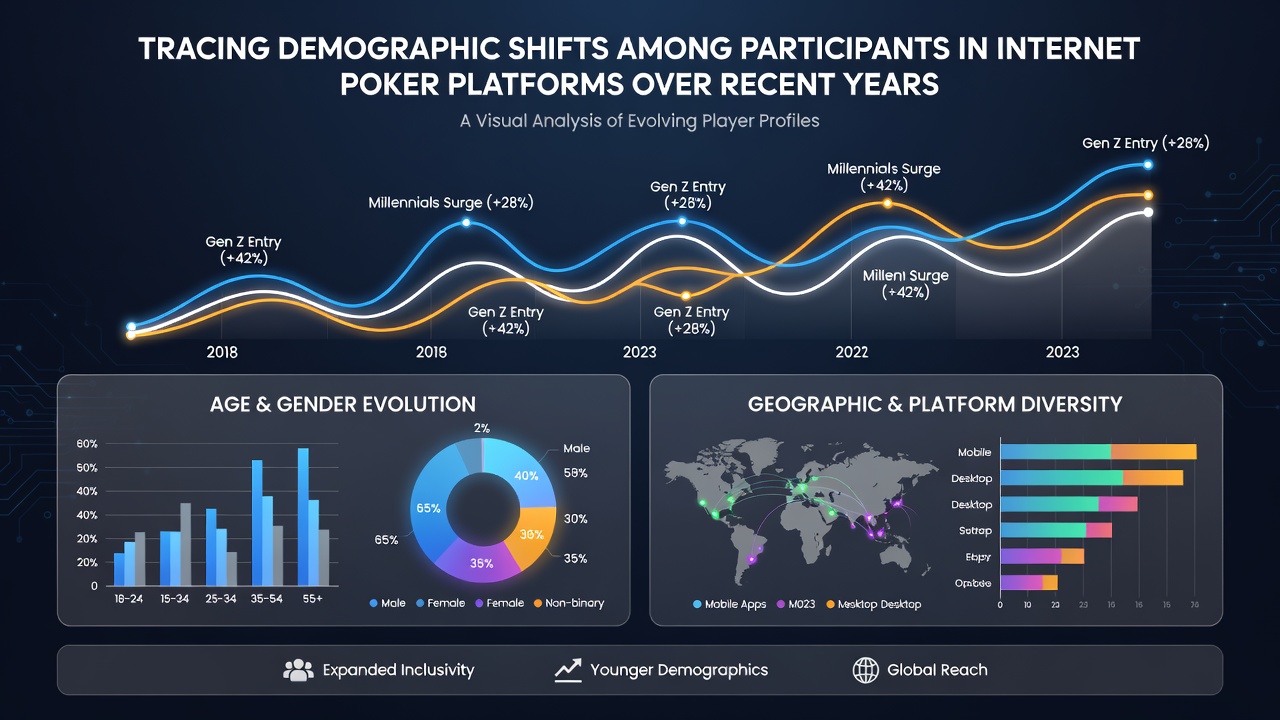
Internet poker platforms have experienced notable changes in participant demographics since 2020, with data indicating shifts in age groups, gender balance, geographic distribution, and preferred access methods. Researchers tracking these patterns through industry reports and regulatory filings note that younger adults and female players represent growing segments while traditional user bases continue to evolve alongside technological and regulatory developments.
Age Distribution Patterns
Studies compiled by academic institutions show that the 18-to-34 age cohort increased its share of active accounts on major platforms between 2021 and 2025, driven partly by mobile application adoption and integration with social features. Observers note that players in this range often favor shorter session formats and multi-table options compared with older cohorts who maintain longer engagement periods on desktop interfaces. Data released in September 2026 from several North American operators confirmed that the proportion of participants aged 35 to 49 remained stable while the over-50 segment declined slightly as a percentage of total users.
Gender Participation Trends
Industry analyses from organizations such as the European Gaming and Betting Association reveal a gradual rise in female participation rates across European markets during the same period. Figures indicate that women accounted for approximately 18 percent of registered accounts in 2022 and reached 24 percent by mid-2026, with higher concentrations appearing in tournaments that incorporate lower buy-in levels and beginner-friendly interfaces. Researchers attribute part of this movement to targeted marketing campaigns and the introduction of anonymous table options that reduce social pressure during play.
Geographic and Device Shifts
Participation from Asia-Pacific regions expanded significantly after 2023, according to aggregated data from multiple platform operators. Countries including Australia, South Korea, and parts of Southeast Asia contributed larger shares of new accounts, often through localized payment systems and language support. Those who've examined traffic logs observe that mobile devices now handle over 70 percent of sessions globally, up from roughly 55 percent in 2021, with tablet usage remaining a smaller but consistent niche for certain demographics.
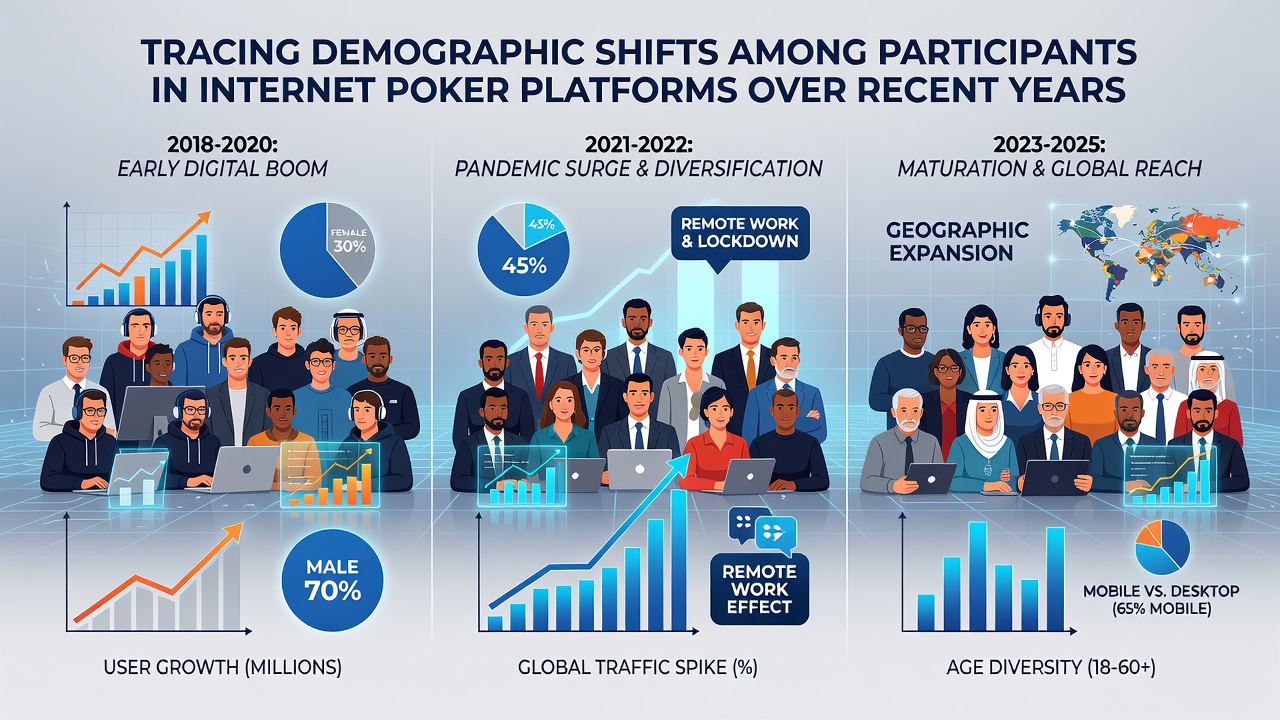
Regulatory changes in several Canadian provinces and Australian states coincided with these geographic movements, allowing licensed operators to expand offerings while collecting more detailed user statistics. One analysis from the Australian Gambling Research Centre linked increased smartphone penetration with higher retention among regional players who previously faced access barriers.
Session Behavior and Format Preferences
Platform metrics demonstrate that average session length shortened across most age groups between 2022 and 2026, with the steepest reductions appearing among users under 30. Participants increasingly select fast-fold and sit-and-go formats rather than traditional ring games, a pattern documented in operator dashboards released quarterly. Evidence from university-led surveys suggests that time constraints and multitasking habits influence these choices, particularly among employed adults balancing multiple responsibilities.
Payment and Verification Influences
Adoption of digital wallets and instant verification processes altered entry patterns for new users in several jurisdictions. Reports indicate that simplified onboarding reduced drop-off rates during registration, enabling broader participation from first-time players who previously encountered friction with traditional banking methods. Data collected through 2026 shows that cryptocurrency options, where permitted, attracted a distinct subset of technically inclined users concentrated in the 25-to-40 range.
Conclusion
Overall patterns documented through operator reports, academic studies, and regulatory disclosures point to continued diversification in participant profiles on internet poker platforms. Age, gender, and geographic distributions have adjusted in measurable ways since 2020, while device preferences and format selections reflect broader technological and lifestyle influences. These shifts continue to inform platform development strategies and compliance frameworks across multiple markets.